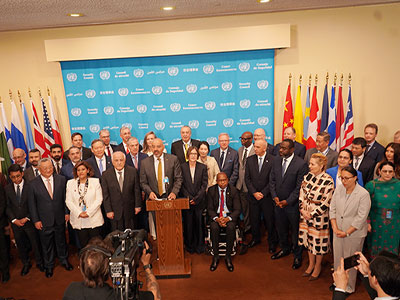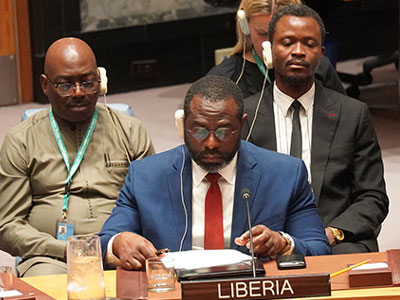
The Republic of Liberia has called on the United Nations and the international community to take urgent action to protect medical facilities and personnel in armed conflicts.
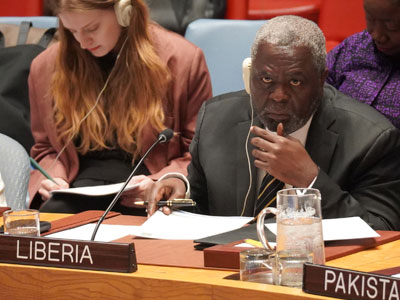
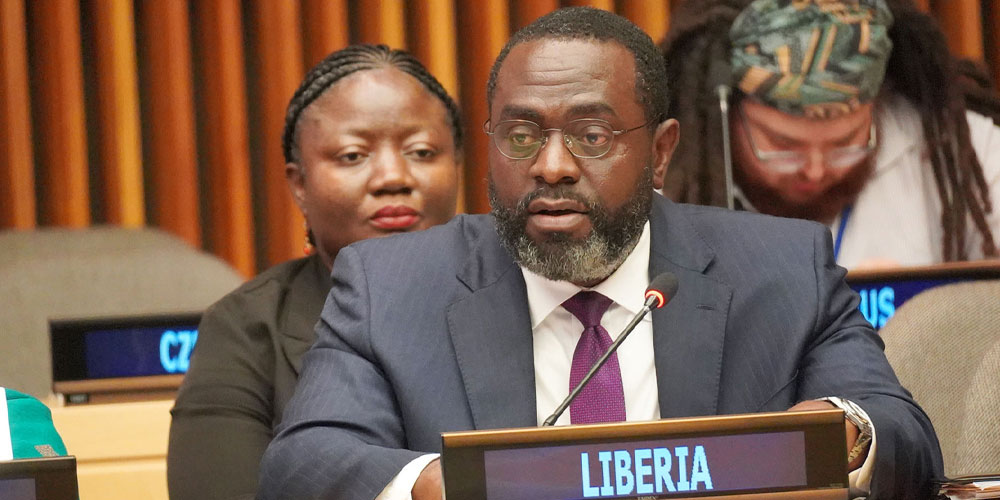
H. E. Baba Sillah, Deputy Permanent Representative of Liberia to the UN, made this plea when he spoke on Tuesday, May 5, 2026, at an Arria-formula meeting convened by Denmark, New Zealand and Spain, to mark the tenth anniversary of United Nations Security Council Resolution 2286 on the protection of medical care in armed conflict.
Delivering Liberia’s statement, H.E. Sillah said the meeting was both timely and necessary, as the global community confronts a worsening pattern of attacks on healthcare systems in conflict zones. He noted that ten years after the unanimous adoption of Resolution 2286, the world is witnessing a stark increase in attacks on medical personnel amid weakened protection. DPR Sillah emphasized that hospitals, once regarded as neutral and inviolable, are increasingly targeted, and healthcare workers are no longer treated as impartial lifesavers.
Highlighting recent data, Amb. Sillah drew attention to the alarming scale of violence, which includes hundreds of attacks on healthcare recorded in 2026 across multiple conflict settings that resulted in deaths, injuries, and widespread destruction of health infrastructure. He pointed out that such attacks push already fragile health systems to the brink, depriving civilians of lifesaving care and undermining prospects for recovery and stability.
Speaking from Liberia’s lived experience, Amb. Sillah stressed that “Conflict systematically undermines fragile health systems, deepens vulnerability, and obstructs post-conflict recovery,” adding that the protection of civilians and healthcare is essential for sustainable peace and state legitimacy.
Liberia outlined Ending attacks on healthcare; Strengthening accountability; and Operationalizing protection measures as pathways to move “from reaffirmation to action.”
Liberia reaffirmed its commitment to working with international partners to strengthen the protection of civilians and uphold international humanitarian law, emphasizing that safeguarding healthcare is fundamental to preserving life and building lasting peace.
Held under the theme “A Decade of Resolution 2286: Protecting Medical Care in Conflict Amid Evolving Threats”, the Arria-Formula Meeting of the Security Council was briefed by Ms. Claude Maon, Intersectional Legal Director of Médecins Sans Frontières ; Professor Len Rubenstein, Johns Hopkins Bloomberg School of Public Health, Safeguarding Health in Conflict Coalition (SHCC); Professor Naz. K. Modirzadeh, Harvard Law School, Director of the Harvard Law School Programme on International Law and Armed Conflict (PILAC); and Ms. Elyse Mosquini, Permanent Observer of the International Red Cross and Red Crescent (ICRC) to the United Nations.
The co-hosts, H.E. Amb. Christina Markus Lassen, Permanent Representative of Denmark; H.E. Amb. Hector Gomez Hernandez, Permanent Representative of Spain; and H.E. Amb. Carolyn Schwalger, Permanent Representative of New Zealand delivered opening remarks in which they all deplored the lack of progress on 2286 and the deficit of political will to implement it.
About Resolution 2286
Adopted unanimously on 3 May 2016, United Nations Security Council Resolution 2286 is a landmark instrument dedicated to the protection of medical care in armed conflict. It strongly condemns attacks against the wounded and sick, medical personnel, and healthcare facilities, and demands full compliance with international humanitarian law, including the obligation to respect medical neutrality.