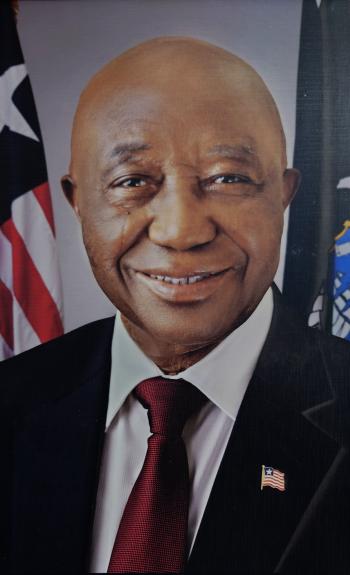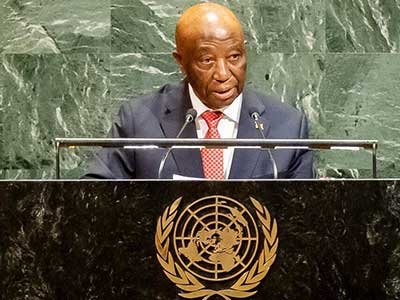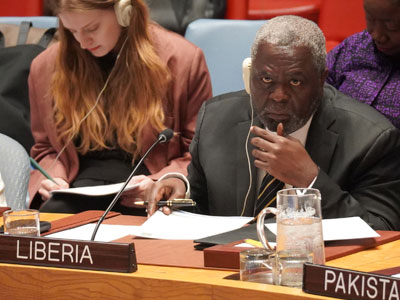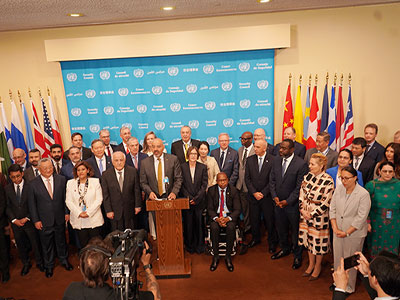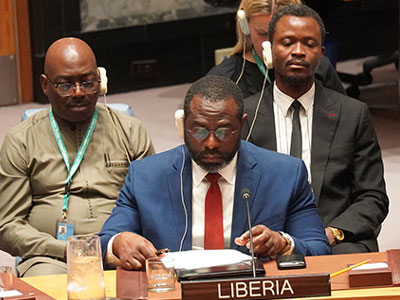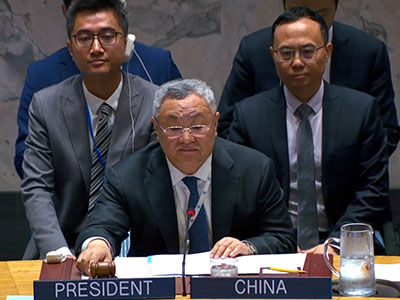
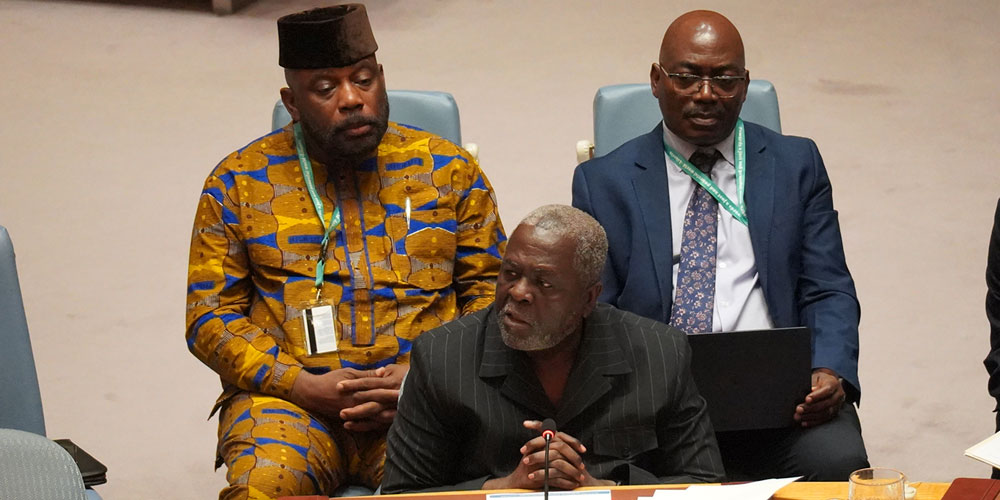
A Statement on “Cooperation between the United Nations and regional and subregional organizationvs in maintaining international peace and security” as prepared for delivery by Amb. Lewis G. Brown, II, Permanent Representative of Liberia to the UN
Mr. President,
1. I thank the briefers for their thoughtful insights, and I welcome the continued engagement of the League of Arab States in the work of the United Nations, particularly in matters of peace and security.
2. Today’s discussion invites us to reflect not only on cooperation in principle, but on cooperation in practice. In a fragmented international environment marked by protracted conflicts, humanitarian distress, and eroding trust, the relationship between the United Nations and the League of Arab States is indispensable.
3. The League of Arab States occupies a unique space in the multilateral landscape. It is, at once, political, cultural, and historical in character and anchored in shared language and identity, operates across a region that has become one of the principal theaters of global insecurity. This dual character gives the League a form of convening power that no external actor, however well resourced, can replicate. We congratulate the League for its exceptional leadership and continued contributions to global peace and security, and which to highlight the following five reflections:
First, UN–LAS Cooperation must be centered on political solutions, not permanent crisis management. Too often, international engagement in the region has treated instability as a condition to be managed rather than resolved. The League’s proximity to conflict dynamics, local actors, and societal pressures positions it as a critical partner in shaping credible, inclusive political pathways—whether in mediation, dialogue facilitation, or post conflict transition.
Second, legitimacy matters, but so does trust. The United Nations brings normative authority through the Charter; the League of Arab States brings regional ownership. When these two forms of legitimacy are aligned, peace efforts gain traction. When they are disconnected, even well intentioned initiatives struggle. Cooperation must therefore be grounded in mutual respect, clear mandates, and sustained consultation—particularly at early stages of crisis engagement.
Third, humanitarian action and political engagement must reinforce one another. Across the Arab region, humanitarian crises increasingly spill across borders, affecting international peace and security. The League’s engagement with national authorities and regional institutions can help bridge the persistent gap between emergency response and longer term stabilization. For Liberia, this integration reflects lessons learned from our own recovery, where peace held only when humanitarian action was paired with political rebuilding.
Fourth, youth and social cohesion deserve greater attention within UN–LAS cooperation. The region’s demographic realities are not a looming risk—they are a present factor shaping peace and instability alike. Marginalization, unemployment, and exclusion create fertile ground for conflict, but they also offer an opportunity for renewal if addressed through coordinated investment, governance reform, and participation. A partnership that overlooks these dimensions risks treating symptoms while ignoring causes.
Fifth, cooperation must be consistent across institutions, not episodic across crises. Strategic dialogue between the United Nations and the League of Arab States should not be activated only when emergencies erupt. It should be routinized, forward looking, and connected to early warning, preventive diplomacy, and peacebuilding tools. Prevention, after all, is less visible than response—but it is far more effective.
Mr. President,
4. Liberia knows that regional organizations can play decisive roles when empowered, coordinated, and trusted. In West Africa, collaboration between the United Nations and regional bodies demonstrated that peace is strongest when those closest to a conflict are part of its solution.
5. The challenge before us is not whether the United Nations and the League of Arab States should cooperate—but whether that cooperation is sufficiently bold, coherent, and sustained to meet the moment we are in.
6. The Security Council has a responsibility to ensure that regional partnerships are not treated as secondary mechanisms, but as strategic assets in the maintenance of international peace and security.
7. If multilateralism is to remain credible, it must be cooperative. If peace is to be durable, it must be inclusive. And if our partnerships are to be meaningful, they must deliver results on the ground.
In conclusion, Mr. President;
8. Liberia stands ready to support a stronger, more structured, and more purposeful relationship between the United Nations and the League of Arab States—one that reflects shared responsibility and shared resolve.
I thank you, Mr. President.