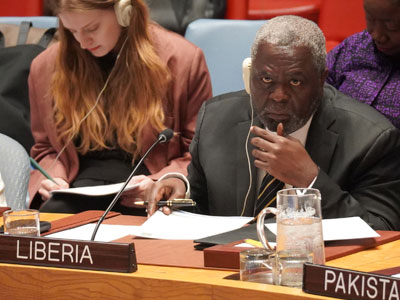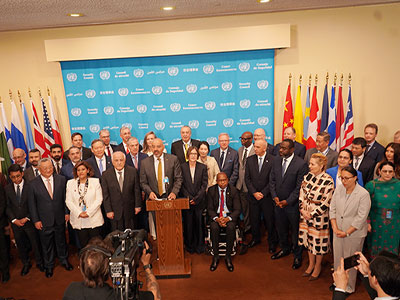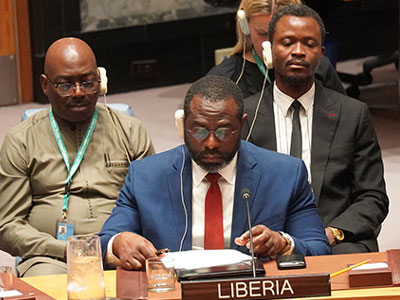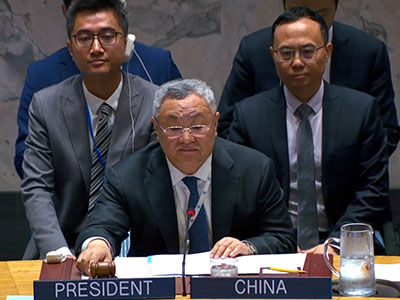
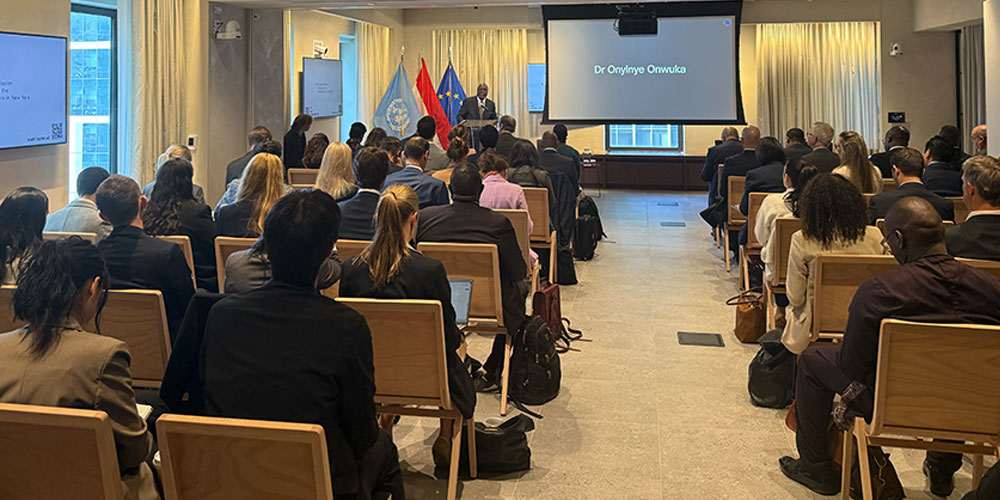
The Permanent Mission of Liberia to the United Nations, on April 28, 2026, co-hosted a high-level side event on the margins of the Berlin Climate and Security Conference (New York Edition), to highlight Africa’s regional and sub-regional responses to the growing nexus between climate change, peace, and security.
The side event, convened at the Permanent Mission of Austria under the theme “Climate, Peace and Security: African Regional Perspectives and Responses,” was co-hosted by Liberia in partnership with the African Union Mission to the United Nations, the Permanent Missions of Austria, Denmark, Slovenia, Mozambique, and the United Nations Climate Security Mechanism (CSM). The meeting brought together senior diplomats, regional organizations, UN officials, and experts of the Climate, Peace and Security (CPS) cluster within the United Nations system.
In his remarks, H.E. Mr. Lewis Garseedah Brown II, Permanent Representative of Liberia t, emphasized that climate change is no longer a distant environmental concern but an immediate and measurable driver of insecurity and instability, particularly in fragile and conflict-affected settings across Africa. Drawing on Liberia’s own experience, Amb. Brown underscored that the mismanagement of natural resources has historically fueled conflict and stressed that natural resources must never again become instruments of war or grievance.
He characterized Climate Change as a threat multiplier that exacerbates poverty, displacement, food insecurity, and inter-communal violence across regions such as the Sahel, the Horn of Africa, and the Lake Chad Basin. Amb. Brown further emphasized that climate impacts are not gender-neutral, disproportionately affecting women and children and intensifying risks of displacement, gender-based violence, and disrupted education.
The discussion showcased the leadership of African institutions, including the African Union (AU) and Regional Economic Communities and mechanisms such as ECOWAS, IGAD, SADC, the Lake Chad Basin Commission, and the Liptako-Gourma Authority, in integrating climate considerations into early warning, conflict prevention, mediation, and peacebuilding frameworks. Participants referenced key continental initiatives, including the AU Climate Security Risk Assessment, the Addis Ababa Declaration on Climate Change and Call to Action, and emerging regional climate adaptation and resilience strategies.
Panelists also addressed the growing implications of climate change for peace operations, humanitarian access, and civilian protection, as well as the links between environmental degradation, conflict financing, and armed group recruitment. The role of transparent, accountable natural resource governance was highlighted as a critical peace and security instrument.
The event underscored the importance of strengthened UN–African Union cooperation, including through the support of the UN Climate Security Mechanism, which provides technical expertise and deploys Climate, Peace and Security Advisors across Africa to advance conflict-sensitive climate action.
Liberia reaffirmed its commitment to African-led, regionally owned, and people-centered approaches to climate security and emphasized the need for predictable climate finance, technology transfer, and resilience-building to support sustainable peace and development. As a custodian of over 40 percent of the remaining Upper Guinean Forest, Liberia reiterated that environmental stewardship is inseparable from peacebuilding and represents a long-term investment in stability and security.